
Nov 2026
Abstract:
In this talk, I will explore how spatial approaches help us resolve plant and microbial biology within intact tissues. Using the soybean root nodule as a model system, I will show how we map the organization and interactions of plant cells and their microbial partners across space. I will also discuss our efforts to build three-dimensional geometries of plant organs, creating structural frameworks for understanding biological patterns at multiple scales. To study spatial organization, we use both bin-based methods, which profile molecular signals in defined regions, and segmentation approaches, which assign measurements to individual cells or tissue features. These complementary strategies reveal aspects of tissue biology. Finally, I will describe how we are applying artificial intelligence to integrate single-cell data with spatial biology. By connecting cellular identity to tissue context, these approaches can deepen our understanding of how plants and microbes function together, and help guide questions, methods, and discoveries.
Bio:
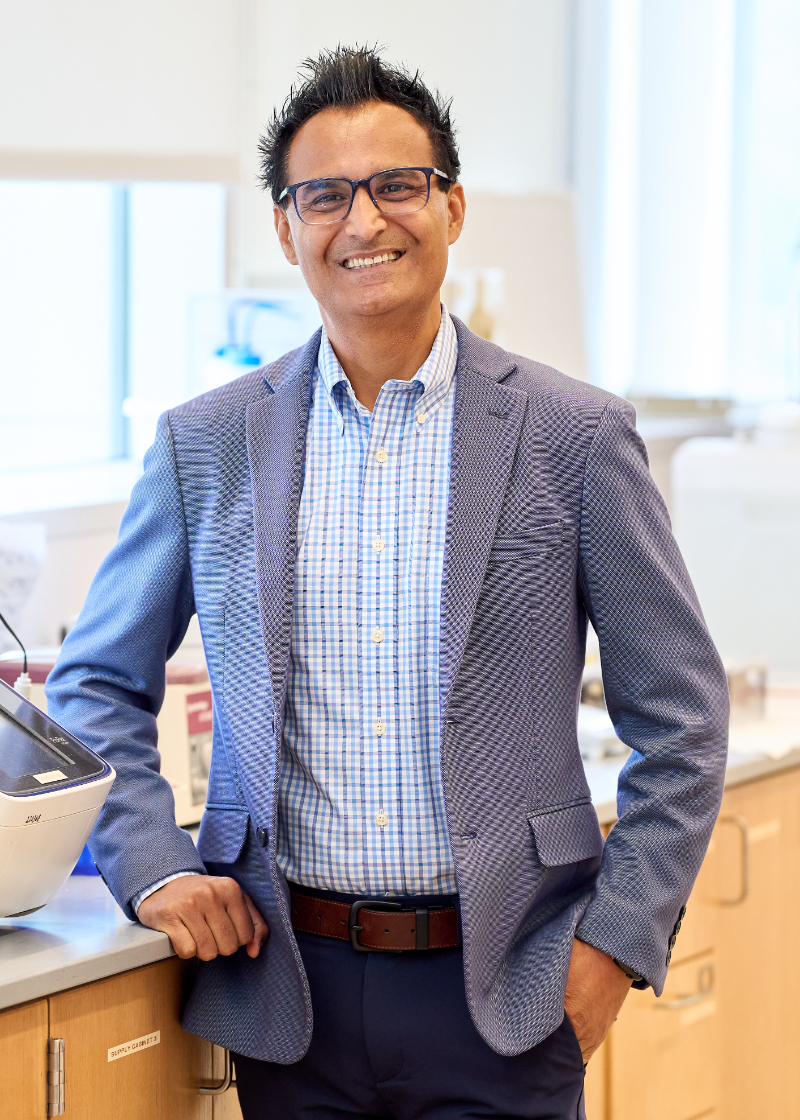
Shahid Mukhtar, Ph.D. is a Professor in the Department of Genetics and Biochemistry at Clemson University. He received his doctoral training at the Max Planck Institute for Plant Breeding Research in Cologne, Germany, where he studied the molecular basis of plant-pathogen interactions. He then completed postdoctoral research at the University of North Carolina at Chapel Hill, where he expanded his work to systems-level analysis of host-pathogen protein interaction networks. Before joining Clemson, Dr. Mukhtar served for 14 years as a faculty member at the University of Alabama at Birmingham, where he established an internationally recognized program in plant immune network biology. Dr. Mukhtar’s group studies plant stress resilience, plant-microbe interactions, and gene regulatory mechanisms using model and crop systems such as Arabidopsis, soybean, and duckweed. His research uses single-nucleus multiomics, spatial transcriptomics, and deep learning to define regulatory networks that shape plant responses to environmental stress and disease. His laboratory is advancing spatial biology through SPARC (Spatial Profiling and Analyses Resources at Clemson), using platforms such as Stereo-seq for high-resolution tissue profiling. His research program is supported by competitive federal grants, including NSF projects integrating machine learning and multi-omics to improve climate resilience in soybean. Dr. Mukhtar has held several leadership roles within the international plant science community. He serves as Director of the Multinational Arabidopsis Steering Committee and chairs its Plant Immunity Subcommittee. He has also served as Chair, Vice-Chair, and Secretary-Treasurer of the Southern Section of the American Society of Plant Biologists. His contributions to teaching, mentoring, and community engagement have been recognized with the Odessa Woolfolk Community Service Award and both the President’s and Dean’s Awards for Excellence in Teaching. Through interdisciplinary research, leadership, and mentorship, Dr. Mukhtar aims to advance integrative biology and develop innovative strategies for agriculture and climate resilience