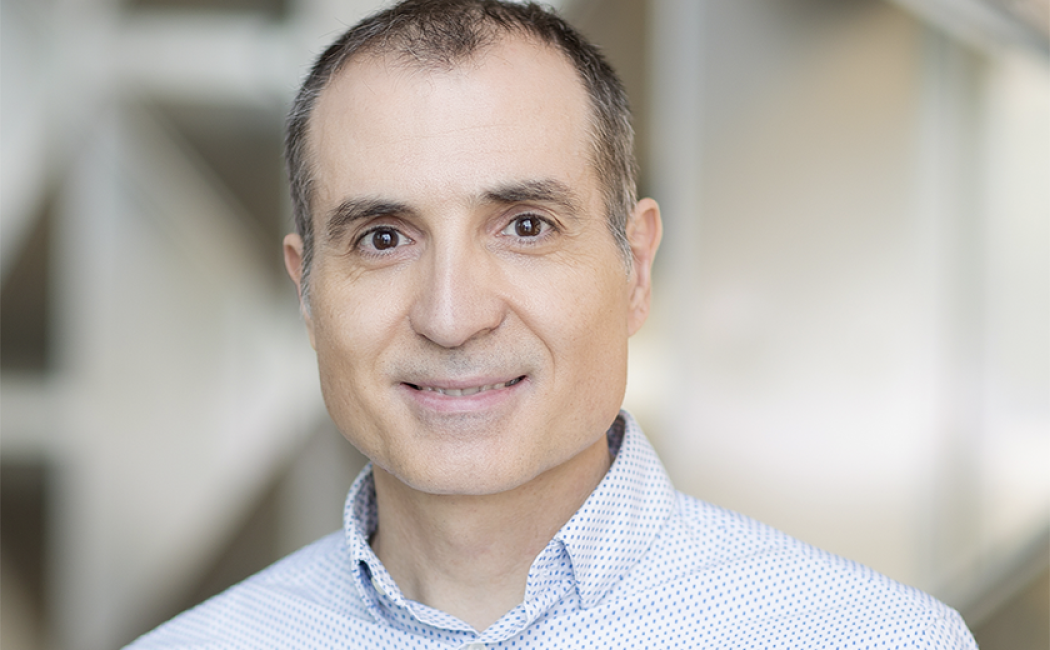
Professor Fernando T. Maestre named Fellow of the British Ecological Society
19 August, 2026
Professor Fernando T. Maestre, Program Chair of Environmental Science and Engineering at KAUST, has been named a Fellow of the British Ecological Society (FBES).
The Fellowship is one of the highest honors awarded by the British Ecological Society, the world’s oldest learned society dedicated to ecology. It recognizes ecologists who have made outstanding contributions through research, teaching, mentorship, leadership, conservation, public engagement, or the application of ecological science.
Professor Maestre is an internationally recognized leader in dryland ecology. His research focuses on understanding how global environmental change affects dryland ecosystems, particularly their biodiversity and functioning and on identifying ways to better conserve and restore these critical environments.
Since joining KAUST, Professor Maestre has led the Dryland Ecology and Global Change Lab, advancing research on the biodiversity and functioning of terrestrial ecosystems in Saudi Arabia and developing science-based approaches to address land degradation in arid and hyper-arid environments. His work aligns closely with Saudi Arabia’s Vision 2030 and the Kingdom’s efforts to combat desertification, restore degraded ecosystems and conserve biodiversity.
Reflecting on the recognition, Professor Maestre said:
“I am deeply honored to be elected a Fellow of the British Ecological Society. I see this recognition not only as a reflection of my own work, but also of the contributions of the many students, postdocs, collaborators and colleagues I have been fortunate to work with over the years. I am particularly proud to receive it while working at KAUST, where we have a unique opportunity to advance our understanding of drylands and contribute scientific knowledge that can support the ambitious environmental and restoration goals of Saudi Arabia.”
The Biological and Environmental Science and Engineering Division (BESE) congratulates Professor Maestre on this well-deserved recognition of his contributions to ecological science.