
Mar 2026
Abstract:
Microalgae have been used for centuries as a source of nutrition. Natural populations of Spirulina (Arthrospira sp.) harvested in the Lake Chad basin and in Mexico from the now extinct Lake Texococo, served as an important source of nutrition for their indigenous peoples over centuries. In the 20th century, these species as well as several eukaryotic species including members of the genera Chlorella, and Haematococcus have been developed commercially for use as animal and aquaculture feed additives, nutraceuticals, human food additives, colorants and antioxidants. Most microalgal species are cultivated phototrophically in open raceway ponds, or tubular, column or flat panel photobioreactors, deriving their energy from sunlight and fixing atmospheric CO2 as their carbon source. At the same time, it was recognized that many microalgal species will grow under mixotrophic or entirely heterotrophic conditions when supplied with a suitable reduced carbon source such as dextrose, galactose, glycerol or acetate, for example. Depending on the species, heterotrophic cultivation of microalgae can result in far greater biomass and product titers as strains are no longer constrained by light limitation encountered in cultures that have achieved high cell densities. Prototheca morifomis is an obligately heterotrophic, oleaginous microalgal species which can grow on a variety of reduced carbon sources achieving extremely high cell densities with the ability to produce copious amounts of triglyceride oil. The development of a facile molecular genetic toolkit for the species unlocks a variety of opportunities to tailor both the triglyceride oil outputs of strains to meet specific nutritional objectives as well as the feedstocks on which they can grow. Dr. Franklin will provide specific examples as well as considerations around feedstock selection that can impact both the cost and sustainability of the resulting products.
Bio:
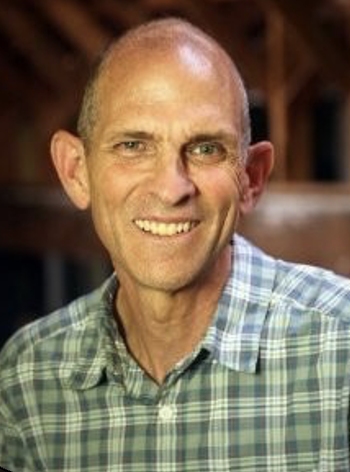
Dr Franklin is a serial entrepreneur whose work has focused on the development of microalgal platforms for the production of food, novel proteins, renewable chemicals and fuels. He holds a Bachelor of Science Degree in Biology from the University of California at Davis and a PhD in Biology from the University of Texas at Austin. His doctoral research was centered around the expression of suppressor tRNAs in higher plants and their role in viral protein expression and as potential tools in altering the nutritional composition of seed storage proteins. As a postdoctoral researcher and adjunct faculty member at the University of Wyoming he continued his work on plant tRNAs developing in vitro systems for their processing. He also began working on the expression of entomocidal/Cry-toxins in cyanobacteria for mosquitocidal applications, work he later brought to Cyanotech Corporation in Kona, Hawaii as Director of Molecular Biology. At Cyanotech he successfully scaled novel microalgal strains for nutraceutical applications and began working with researchers at The Scripps Research Institute on protein expression in Chlamydomonas reinhardtii. He subsequently moved to Scripps in La Jolla, California as a Senior Researcher in the Laboratory of Dr Stephen Mayfield. Dr Franklin and Dr Mayfield subsequently co-founded San Diego based Rincon Pharmaceuticals where he served as Board Member and Chief Scientific Officer, leading a team focused on plastid-based expression of antibodies, antibody fragments and other biologic proteins. After Rincon, Dr. Franklin moved to Solazyme, Inc. (later acquired by Corbion, Inc), a San Francisco based company seeking to develop microalgal based foods, renewable fuels and chemicals. As V.P. of Discovery and Molecular Biology at Solazyme, he and his team evaluated thousands of microalgal, bacterial and yeast strains for their ability to produce triglyceride oils, successfully developing the obligate heterotrophic microalga, Prototheca moriformis as a robust platform for the production of a variety of triglyceride oils, successfully developing a manufacturing process in a fit-for-purpose facility in Sao Paulo State, Brazil at 600,000 L scale. Following his tenure at Solazyme, Dr Franklin co-founded Checkerspot, Inc., continuing to utilize P. moriformis to produce triglyceride oils for use in food and materials applications, serving as Board Member and Chief Scientific Officer. He oversaw all aspects of the company's biology platform, including strain and fermentation development, molecular biology, analytical chemistry and downstream process development as well as materials science, formulation and process chemistry. Dr Franklin is co-author on 170 research publications, patents and patent applications.