
Mar 2026
Abstract:
Thermoresponsive switchable hydrophilicity solvents reversibly toggle water affinity under modest temperature swings, enabling unique separation capabilities not accessible to traditional methods. This talk highlights how thermomorphic amine solvents can be engineered for two separation innovations. First, we demonstrate temperature swing solvent extraction (TSSE) for desalination into the hypersaline regime, showing that it can significantly enhance the overall water recovery yields of conventional seawater reverse osmosis beyond the typical ≈50% and up to zero-liquid discharge (ZLD). Second, in switchable solvent selective extraction (S3E) for direct lithium extraction (DLE), the solvent preferentially extracts Li+ over competing alkali cations, maintaining >1 order-of-magnitude selectivity even when Li+ is 1,000× more dilute than Na+ or K+. We elucidate the fundamental mechanisms underlying the separation performance by studying thermoresponsive solvent properties with the Kamlet–Taft polarity scale, mapping phase equilibria and partitioning of water, salt, and solvent, and probing molecular and nanoscale interactions using atomic pair distribution function analysis, small-angle X-ray scattering, and molecular dynamics simulations. These studies establish a general framework for using stimuli-responsive solvents to create new, tunable platforms for aqueous separations.
Bio:
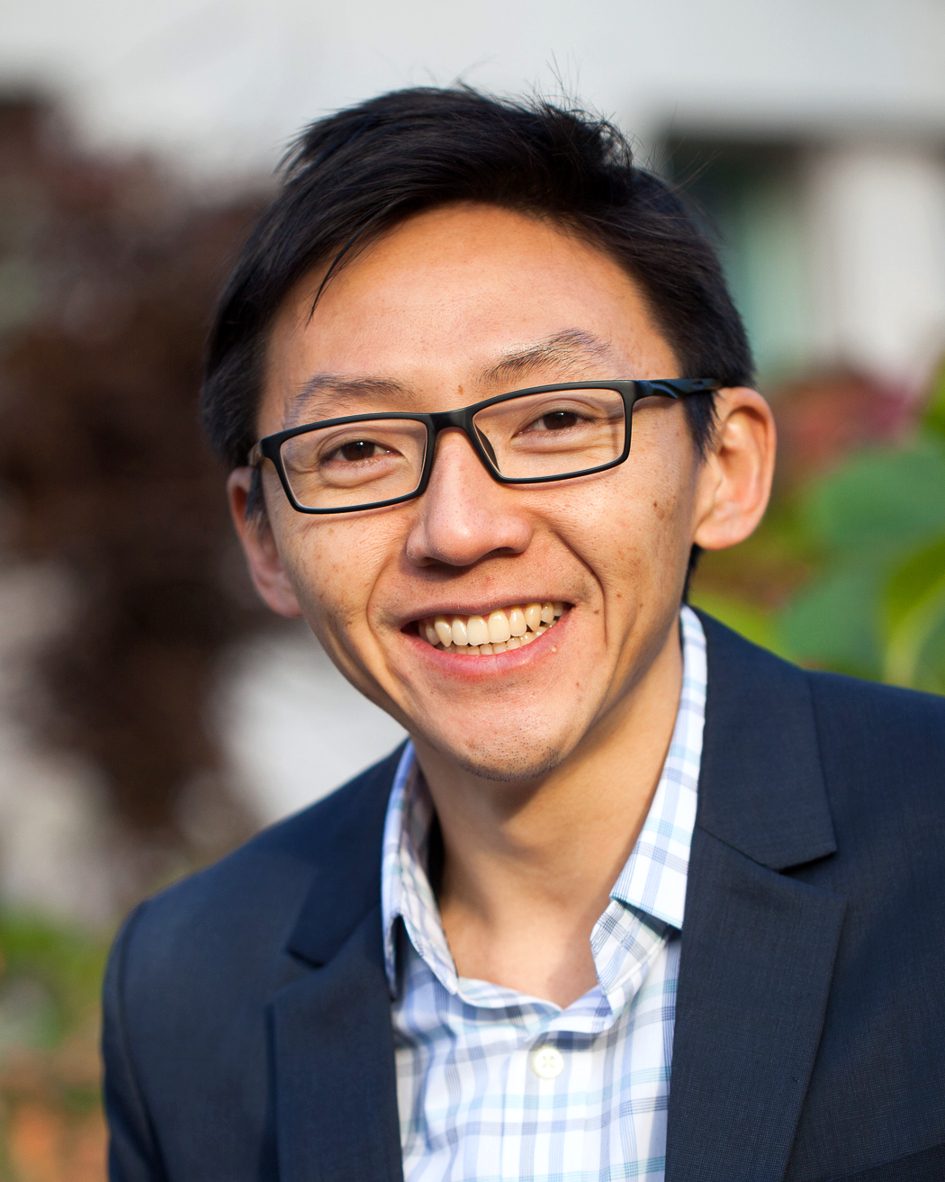
Ngai Yin Yip is the La Von Duddleson Krumb Associate Professor of Earth and Environmental Engineering at Columbia University. He received his doctoral degree in Chemical and Environmental Engineering from Yale University. His current research is focused on advancing physicochemical technologies and innovations for critical separation challenges in water, energy, and the environment. Current projects include high-salinity desalination, zero-liquid discharge, and recovery of critical materials from waste streams using selective membranes and switchable solvents. For his research contributions, Dr. Yip has been recognized with the Impact Award by the Global Prize Innovation in Desalination and is listed as a top 2%-cited researcher by Stanford-Elsevier since 2018. He featured as an Emerging Investigator for Environmental Science: Water Research & Technology and as a Young Talent for Frontiers of Environmental Science & Engineering. He is currently an associate editor for RSC journal Environmental Science: Advances. Additionally, Yip serves as an editorial advisory board member for ACS ES&T Engineering and as editorial board member for Desalination and Chemical Engineering Journal Advances.