
Mar 2026
Abstract:
What happens to the developing brain when there are extra X chromosomes? Having an extra sex chromosome is more common than many people realize. Klinefelter syndrome (47,XXY) affects about 1 in 400–600 males, while rarer related conditions such as 48,XXXY and 49,XXXXY can have even stronger effects on brain development. These conditions are associated with a wide range of neurological features, from learning difficulties and speech delay to seizures, autistic traits, and major cognitive impairment. Yet we still know surprisingly little about how extra X chromosomes shape the developing human brain.
In this talk, I will present how we used stem cell–derived human brain organoids to fill this knowledge gap. These miniature three-dimensional models of the developing cortex allowed us to observe what happens as brain cells form, organize, and communicate in the presence of one or more extra X chromosomes.
By combining genomics, single-cell analysis, tissue imaging, and electrophysiology, we found that extra X chromosomes disrupt brain development in a striking dose-dependent manner: the greater the number of extra X chromosomes, the more severe the defects. X chromosome overdosage altered early neural patterning and cortical layering, impaired astrocyte development, and increased neuronal excitability.
Our work offers a new window into the biology of sex chromosome aneuploidies and highlights brain organoids as a powerful platform for uncovering how gene dosage can shape human neurodevelopment.
Bio:
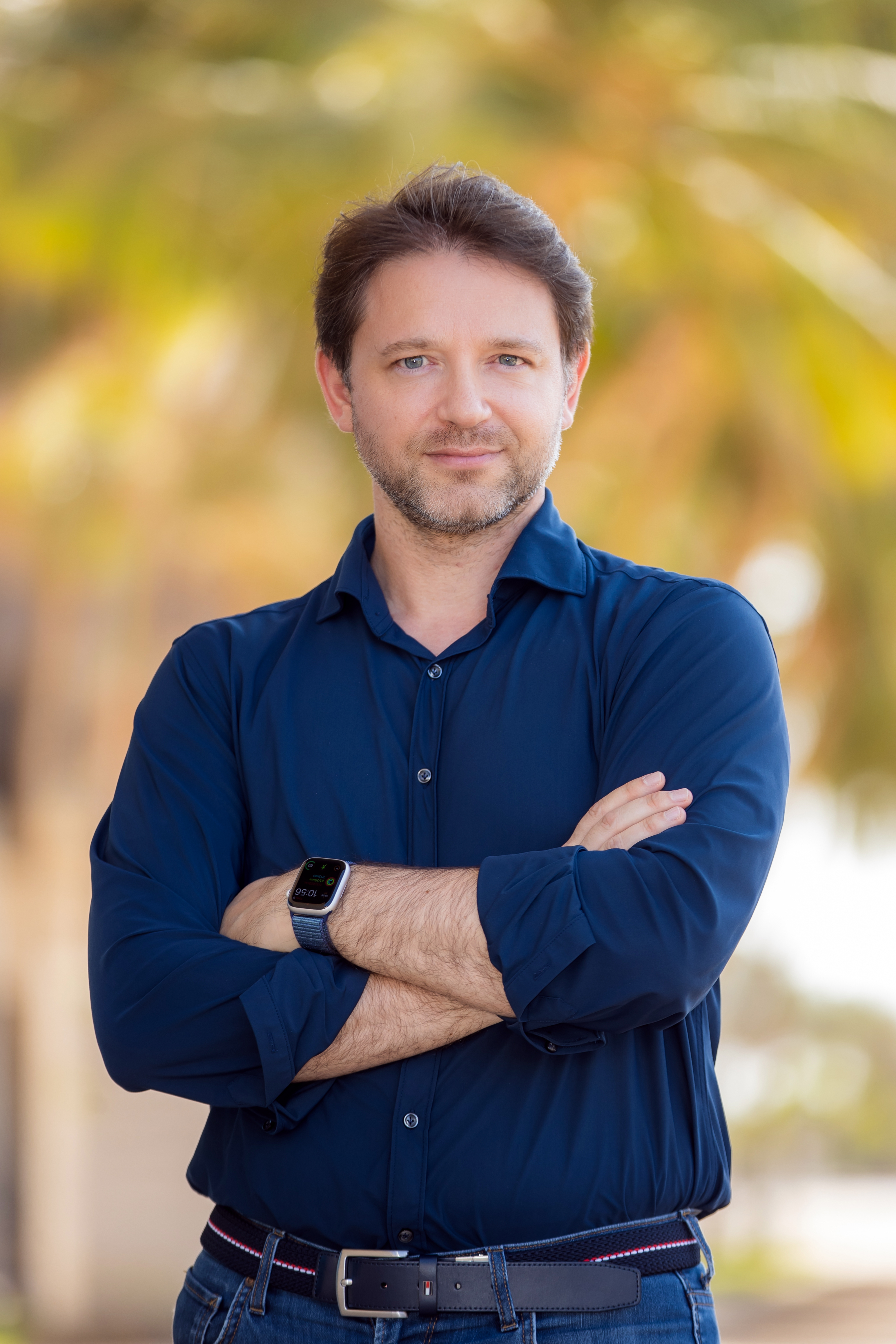
Professor Antonio Adamo earned his B.S., M.S., and Ph.D. in Medical Biotechnologies and Molecular Medicine from the University of Milan, Italy. He completed postdoctoral fellowships at the Center of Regenerative Medicine in Barcelona, Spain, and the European Institute of Oncology in Milan. In February 2016, he joined KAUST, drawn by its state-of-the-art facilities and collaborative research environment.
Professor Adamo’s research interests focus on use of human embryonic stem cells (hESCs) and patient-derived induced pluripotent stem cells (iPSCs) to model the onset and progression of human disorders linked to sex chromosome aneuploidies “in a dish.” His team combines reprogramming, brain organoid derivation, and genome editing techniques with a multiomics approach to identify the transcriptional and epigenetic signatures underlying human diseases. His lab has developed extensive cohorts of iPSC lines from patients with sex chromosome aneuploidies, including the first Saudi iPSC cohort, to study the molecular dysregulations associated with X and Y chromosomes overdosage.