
Apr 2026
Abstract:
Animals constantly monitor both the external world and the internal state of their own bodies. How nervous systems integrate these signals to guide behavior is a fundamental question across neuroscience, physiology, and bioengineering. In this seminar, I will present a comparative perspective on body sensing in mammals and octopuses.
First, I will discuss our work in mice on vibrotactile interoception—the perception of internally generated mechanical signals. Using a behavioral paradigm with controlled internal vibration, we show that mice can detect vibrations arising from different anatomical sites. By combining biomechanics measurements, computational modeling, electrophysiology, in vivo imaging, and causal circuit perturbations, we identify how these signals propagate through the body and are encoded by somatosensory pathways, revealing a body–brain circuit for internal mechanical sensing.
I will then connect these findings to our ongoing octopus research, focusing on proprioception, arm control, camouflage, wound healing, and regeneration of complex neural circuits. Comparing mammals and octopuses highlights shared challenges and distinct solutions for sensing the self in very different bodies.
Bio:
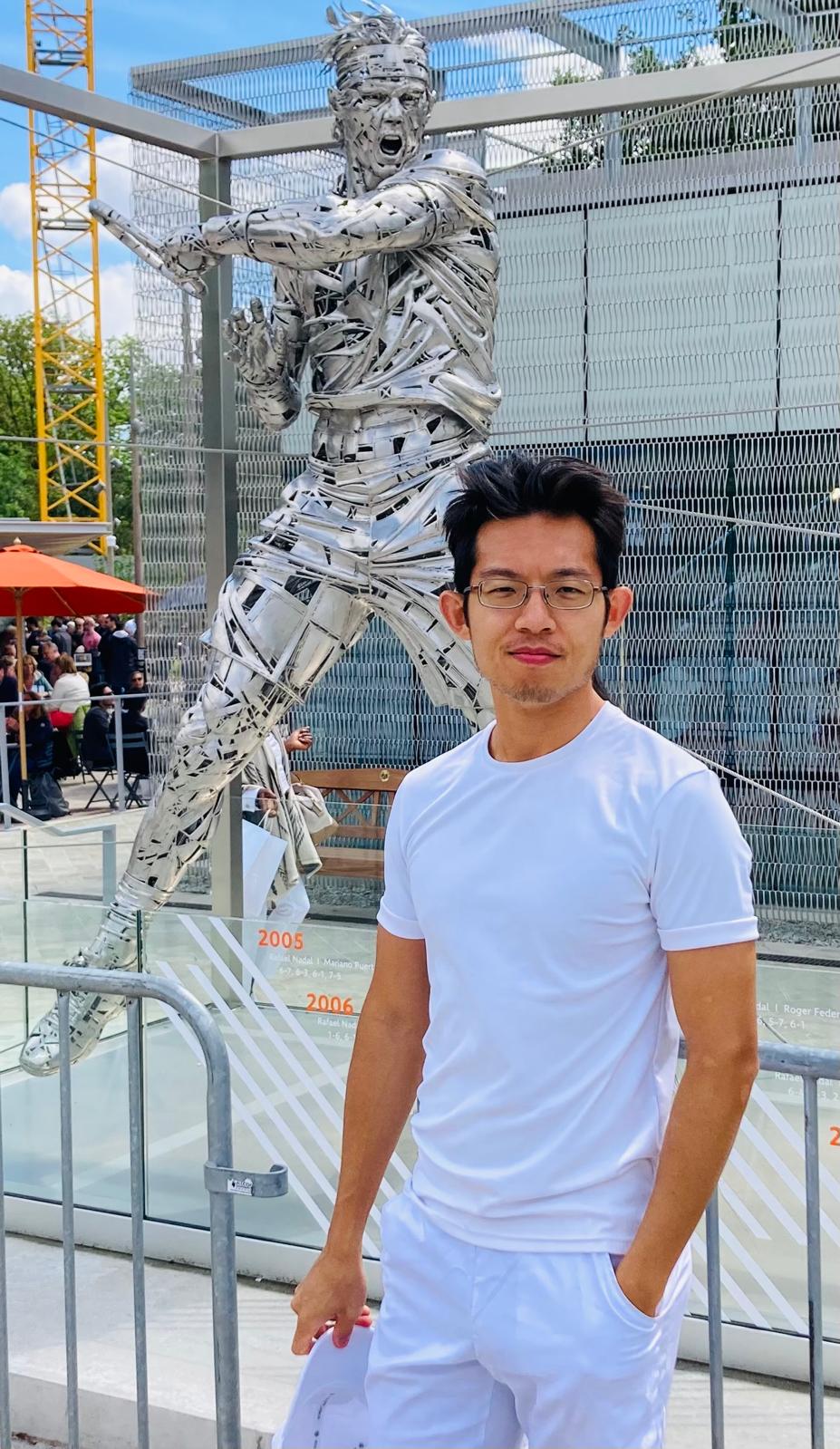
Kuo-Sheng Lee, PhD, is an Assistant Research Fellow at the Institute of Biomedical Sciences, Academia Sinica. His research focuses on sensory coding in mechanoreceptors and their central circuits, combining free moving two-photon imaging, holographic optogenetics, electrophysiology, and closed-loop behavior. He trained at the Max Planck Florida Institute and the University of Geneva, and his work has appeared in Nature, Neuron, and Nature Neuroscience. He is a recipient of Academia Sinica’s Career Development Award and the Innovative Young Scholar Award.