
Apr 2026
Abstract:
Artificial intelligence (AI), robotics, and advanced sensing technologies are redefining agriculture as a data-driven, autonomous system capable of operating under increasingly constrained environmental conditions. This talk presents a comprehensive framework for closing the loop in agriculture, integrating multi-scale sensing, AI-driven analytics, and robotic actuation to enable precise, real-time decision-making.
Dr. Ampatzidis will highlight state-of-the-art platforms, including Agroview and Agrosense, that combine aerial and ground-based sensing with machine learning to deliver high-resolution insights into plant health, canopy structure, yield, and spatial variability. These technologies enable targeted interventions such as variable-rate nutrient application, early stress detection, and yield forecasting. Complementing these systems, Dr. Ampatzidis will present AI-enabled robotic solutions for precision weed management, smart spraying, and automated trunk injection, demonstrating how intelligent machines can reduce labor dependency and optimize input use.
Beyond current applications, the talk introduces a forward-looking vision for autonomous agricultural systems in arid and controlled environments, where water scarcity, extreme heat, and resource limitations demand a paradigm shift. In desert agriculture, AI-driven sensing and control systems can optimize water use, detect stress before visible symptoms, and enable resilient crop production under harsh conditions. In controlled environments such as greenhouses and vertical farms, agentic AI systems can manage climate, irrigation, and crop health through continuous learning and adaptive decision-making.
Together, these innovations position agriculture as an integrated cyber-physical system, where sensing, intelligence, and automation converge to maximize productivity, sustainability, and resilience. Attendees will gain insights into how these technologies can be scaled to address global challenges in food security, resource efficiency, and climate adaptation, particularly in regions such as Saudi Arabia.
Bio:
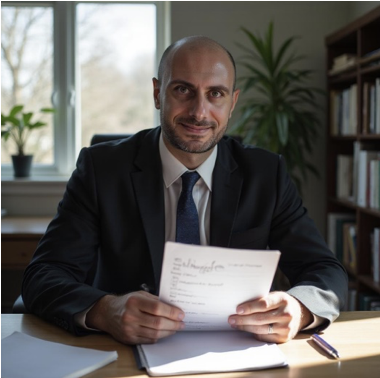
Dr. Yiannis Ampatzidis is a Professor in the Department of Agricultural and Biological Engineering at the University of Florida (UF), where he leads the Precision Agriculture Engineering program at the Southwest Florida Research and Education Center (SWFREC). His research focuses on AI-enabled precision agriculture, robotics, and autonomous systems, with an emphasis on developing intelligent, data-driven solutions for high-value crop production. Dr. Ampatzidis specializes in integrating machine vision, UAV-based sensing, and ground robotic systems to enable early plant stress and disease detection, site-specific crop management, and real-time decision-making. His work advances the transition from data collection to closed-loop, autonomous agricultural systems that improve productivity, resource efficiency, and sustainability. He has developed several innovative technologies, including Agroview, an award-winning AI platform for aerial crop analytics, and AI-enabled smart spraying systems for precision input applications. His research has been recognized with multiple prestigious awards, including the UF Research Foundation Professorship (2024–2027), the UF Innovation Award, and the ASABE AE50 Award. Dr. Ampatzidis has published over 125 peer-reviewed journal articles and more than 250 conference papers. He currently serves as Editor-in-Chief of Smart Agricultural Technology and holds editorial roles with Computers and Electronics in Agriculture and other leading journals in the field. Throughout his career, he has secured over $18 million in competitive research funding, with approximately $8 million directly supporting his program. His work bridges research and deployment, aiming to enable scalable, intelligent agricultural systems for diverse environments, including emerging applications in arid and controlled-environment agriculture.