Abstract:
Agriculture is transitioning from mechanized production toward intelligent, autonomous systems capable of perceiving, interpreting, and responding to complex crop and environmental conditions. This talk presents Dr. Ampatzidis’s research on integrating artificial intelligence, computer vision, advanced sensing, robotics, and precision actuation to develop closed-loop agricultural systems. Dr. Ampatzidis will highlight novel approaches for plant-level perception, crop monitoring, early stress and disease detection, yield prediction, and autonomous decision-making using aerial and ground-based sensing. Platforms including Agroview and Agrosense demonstrate how AI can transform heterogeneous sensor and imagery data into actionable information on crop health, structure, and productivity. These capabilities are extended to intelligent machines, including smart sprayers and robotic systems that enable targeted, real-time agricultural interventions.
A key contribution of this research is the development of early disease and stress detection technologies that can identify subtle crop responses before they become apparent through conventional scouting, enabling a shift from reactive to predictive crop management. Importantly, several technologies developed through this research, including the smart sprayer, Agroview, Agrosense, and AI-based disease and stress detection systems, have progressed beyond research validation and have been licensed to three companies for commercialization, including a University of Florida spinout.
The talk will conclude with a research vision for autonomous agriculture in challenging environments such as Saudi Arabia, where water scarcity, extreme heat, and labor constraints demand efficient and adaptive production systems. A particular emphasis will be placed on developing low-cost, practical, and scalable technologies tailored to local agricultural needs, rather than relying exclusively on expensive, high-end automation. Examples include affordable harvest-aid technologies for date palm production, intelligent sensing and decision-support tools, and targeted robotic systems that can improve labor productivity and resource-use efficiency. By integrating appropriate technologies with AI, sensing, and automation, the goal is to develop practical pathways toward more productive, resilient, and sustainable agriculture in Saudi Arabia and other resource-constrained environments.
Bio:
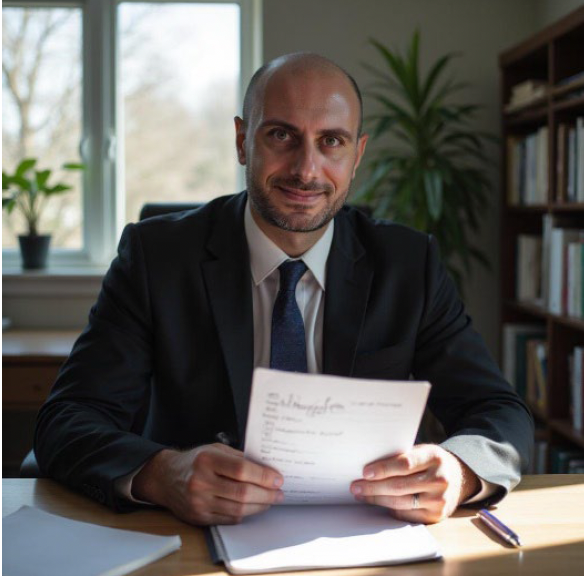
Dr. Yiannis Ampatzidis is a Professor in the Department of Agricultural and Biological Engineering at the University of Florida (UF), where he leads the Precision Agriculture Engineering program at the Southwest Florida Research and Education Center (SWFREC). His research focuses on AI-enabled precision agriculture, robotics, and autonomous systems, with an emphasis on developing intelligent, data-driven solutions for high-value crop production. Dr. Ampatzidis specializes in integrating machine vision, UAV-based sensing, and ground robotic systems to enable early plant stress and disease detection, site-specific crop management, and real-time decision-making. His work advances the transition from data collection to closed-loop, autonomous agricultural systems that improve productivity, resource efficiency, and sustainability. He has developed several innovative technologies, including Agroview, an award-winning AI platform for aerial crop analytics, and AI-enabled smart spraying systems for precision input applications. His research has been recognized with multiple prestigious awards, including the UF Research Foundation Professorship (2024–2027), the UF Innovation Award, and the ASABE AE50 Award. Dr. Ampatzidis has published over 140 peer-reviewed journal articles and more than 260 conference papers. He currently serves as Editor-in-Chief of Smart Agricultural Technology and holds editorial roles with Computers and Electronics in Agriculture and other leading journals in the field. Throughout his career, he has secured over $18 million in competitive research funding, with approximately $8 million directly supporting his program. His work bridges research and deployment, aiming to enable scalable, intelligent agricultural systems for diverse environments, including emerging applications in arid and controlled-environment agriculture.