
Sep 2026
Abstract:
Meeting future water and resource needs will require treating waste streams as resource cocktails to be valorized rather than liabilities to be discarded. Yet no single technology fits all: each stream demands separations tuned to its own chemistry. My research designs fit-for-purpose systems that recover water, energy, and valuable materials from these complex streams, pairing process and material design to extend mature physicochemical and electrochemical technologies toward separations once out of reach.
In this talk, I will present my work across three research areas. First, I will discuss solvent extraction for hypersaline brine desalination and the selective recovery of critical metals from oil and gas produced water. Second, I will discuss the molecular-level design of ion-exchange membranes that overcome conventional selectivity-conductivity trade-offs, enabling electrodialysis under hypersaline conditions. I will also present fundamental studies aimed at understanding monovalent ion selectivity. Third, I will present adsorptive membranes that capture and recover nitrogen and phosphorus from wastewater, creating a direct pathway from treatment to fertilizer production. I will close with my vision for a research program centered on decentralized, fit-for-purpose water treatment, brine valorization, and resource recovery, along with an overview of proposed courses in separation processes and resource recovery.
Bio:
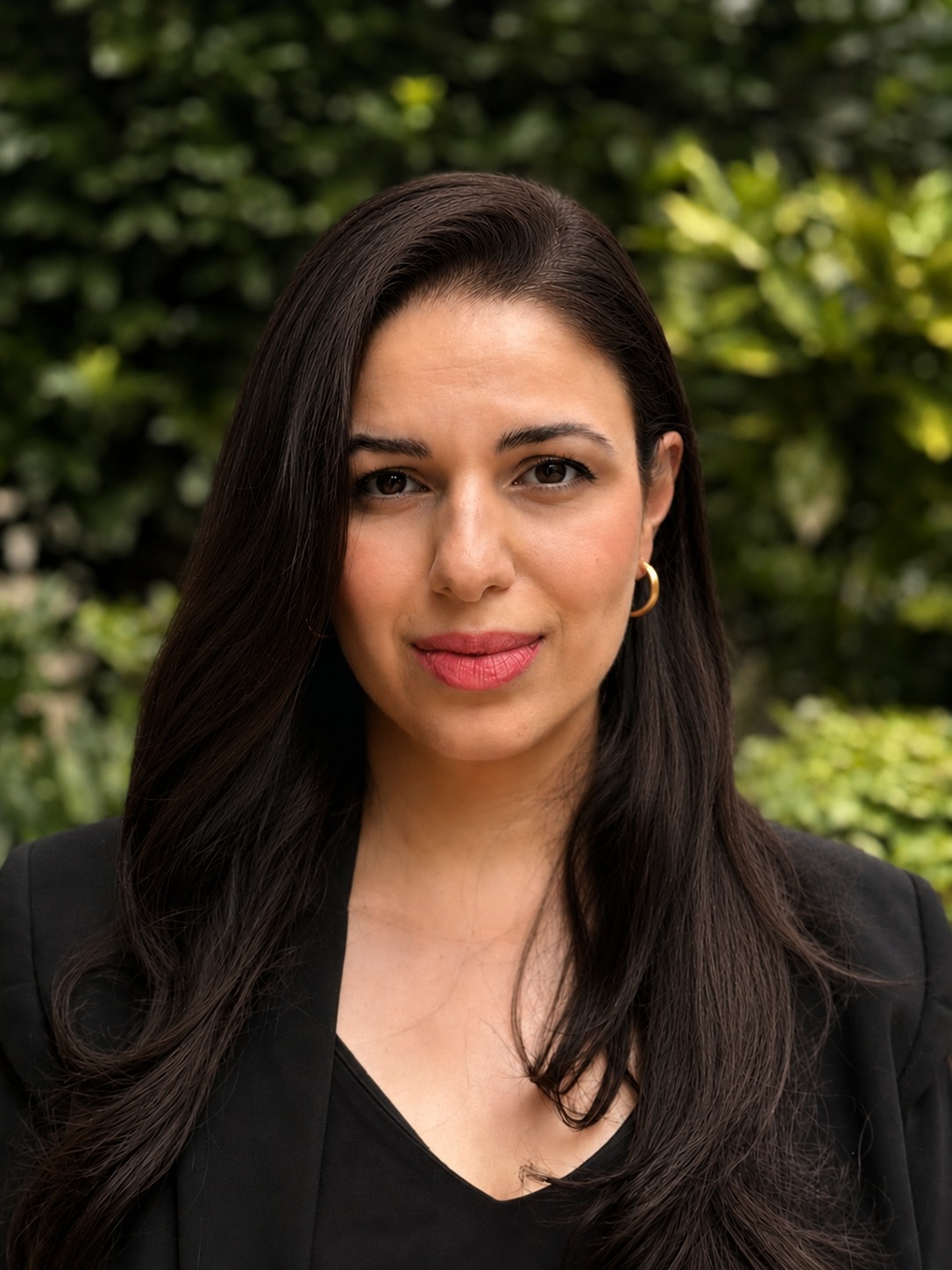
Sara Abu-Obaid is a Postdoctoral Research Scientist at Columbia University. Her research focuses on developing materials and processes for advanced separations. She earned her Ph.D. in Chemical Engineering and Applied Chemistry from the University of Toronto, following an M.A.Sc. in Civil Engineering and a B.A.Sc. in Environmental Engineering from the University of Waterloo. She then conducted postdoctoral research in the Advanced Membranes Lab at the University of Toronto before joining Columbia. Her work has been published in Joule, Chemical Engineering Journal, and Chemistry of Materials, the last of which led to a patent application. She co-prepared a successful $1.6 million U.S. Department of Energy proposal to recover critical metals from oil and gas produced water. She has also received several honors, including the Ontario Graduate Scholarship, the Paul Cadario Doctoral Fellowship in Global Engineering, and the Laurence Hamlin Memorial Award for classroom teaching.