
Sep 2026
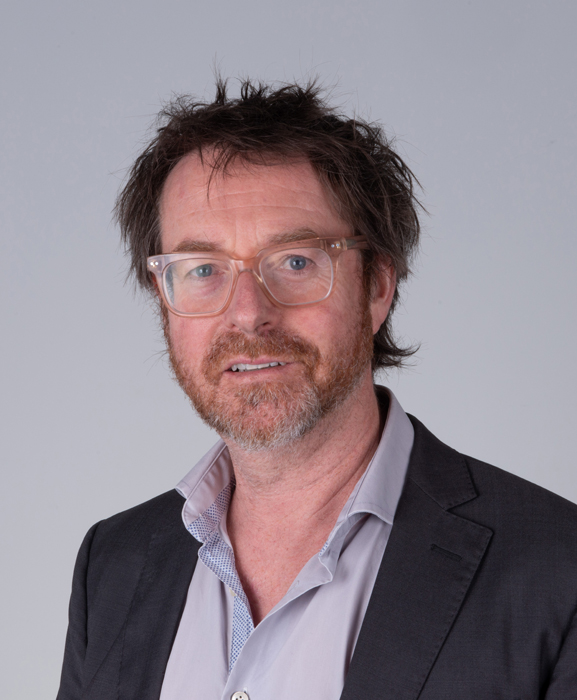
In 1989, Roger Hellens joined the John Innes Centre, UK as a postgraduate researcher building RFLP maps of pea. In 2024, he co-founded his second company. Between those points sit thirteen other roles, and this talk argues that the shape of the sequence matters more than any individual position in it.
The first stage is technical: mapping pea, a PhD on chalcone synthase promoters, and a postdoc building a binary vector. That vector became pGreen, distributed to more than 500 laboratories and cited nearly 2,000 times — the moment personal technique became other people's infrastructure. The second stage converts expertise into programmes. Arriving at HortResearch, New Zealand in 2001 as a scientist, he moved through science leader to group leader, ending with 69 staff and a $10m kiwifruit portfolio. The outbreak of a bacterial disease (Psa - Pseudomonas syringae pv. actinidiae) in 2010 tested what that authority was for: with an industry's principal cultivar failing, the job became reallocating money and people across five disciplines at speed, pursuing diagnostics, genome sequencing and germplasm screening in parallel. The tolerant selection released from that work, Gold3, is now a commercial success.
The third stage widens again — a professorship and deputy executive directorship at QUT, then $29m of annual research strategy at Scion — and the fourth turns capability into ventures, with the Kiwifruit Breeding Centre, GenXtraits and RheostatTx. The pattern throughout is that each promotion changed the unit of work: from experiment, to tool, to team, to portfolio, to sector.
Two lessons for students. Strategic authority is borrowed from technical credibility and cannot be acquired any other way — but technical excellence that never converts into programmes or products stays smaller than it deserves to be. And nothing transfers automatically: I took the Institute of Directors strategy course in 2024, twenty years after first leading a team. You keep going back to being a beginner.
Bio:
Roger Hellens is a life scientist with over 35 years of experience leading and conducting industry-oriented research in molecular biology, bioinformatics, genetics, cell biology and breeding. Roger joined the Kiwifruit Breeding Centre (KBC) as Chief Technology Officer and leads the adaptation, adoption, and implementation of tools and technologies to accelerate the discovery of new kiwifruit varieties. He is also the co-founder of genXtraits, a California-based startup that has developed methods to craft crops for a changing climate and healthier living. From 2019 to 2022, Roger was the General Manager – Forest to Timber Products at Scion, the New Zealand Institute for Forestry, where he helped establish the New Zealand Timber Design Centre. In 2014, Roger joined the Queensland University of Technology (QUT) and the Centre for Tropical Crops and Biocommodities. He held several leadership positions as an Agricultural Biotechnology Professor and the Institute for Future Environments (IFE) Deputy Executive Director at QUT. He also helped establish Australia’s National Tree Genomics Program. From 2000 to 2014, Roger worked for the New Zealand government research institute Plant & Food Research (formerly HortResearch), where he held several senior roles, including leading the institute’s 80-person genomics research program and the kiwifruit breeding research program. Roger’s research interests at Plant & Food Research included developing red-fleshed apple and kiwifruit varieties and exploiting Next Generation Sequencing (NGS) techniques. He also maintained a keen interest in post-transcriptional gene regulation, which has become relevant in understanding the role upstream open reading frames (uORF) play in regulating vitamin C. Before moving to New Zealand, Roger worked at the John Innes Centre in Norwich, UK, where he developed the first genetic maps of peas (including his PhD on the molecular basis of Mendel’s white flower phenotype). He also developed the pGreen plant transformation vector and studied gene silencing (RNAi) in petunia. Roger received a PhD in Molecular Genetics from the University of East Anglia in 1995 and a Bachelor of Science from the University of Liverpool in 1989.