
Sep 2026
Abstract:
The remote and inaccessible nature of oceanic habitats largely preclude direct observations of their inhabitants. However, echosounders can provide information on both physics and biology, even at large depths. Submerged, stationary echosounders enable studies of organismal behavior and ecosystem processes at spatial scales of centimeters to hundreds of meters and timescales of seconds to years. In this talk I illustrate the type of data that can be obtained both for fishes and plankton, including results on the behavior and diel vertical migration of small mesopelagic (deep-living) fishes in the Red Sea. Other relevant applications might be studies of behavior and abundance of fishes at mesophotic reefs.
Bio:
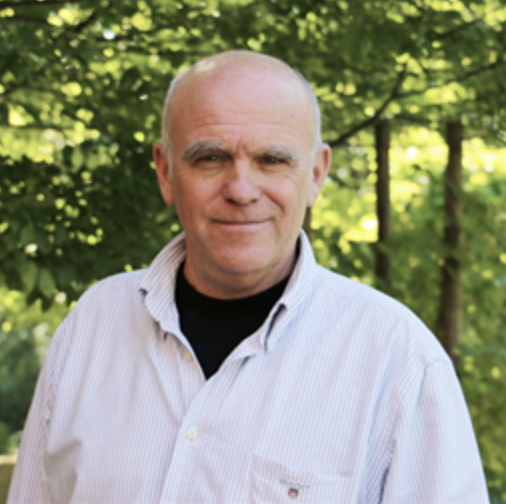
Professor Stein Kaartvedt earned his Ph.D. in marine biology studying the vertical migration, advection, and retention of fjord-living plankton at the University of Bergen, Norway. He later moved to Woods Hole Oceanographic Institution for a post-doctoral scholarship where his work first turned to acoustic echosounders as tool for describing plankton dynamics. Dr. Kaartvedt returned to Norway in 1992 as a professor at the University of Oslo. In 2009, he became a founding Faculty member at KAUST, and spent 5 years as a professor in marine science while also serving as associate director for the Red Sea Research Center. His work at KAUST research used echosounders among other methods to study mesopelagic fishes, characterize the deep scattering layer, and explore the Red Sea’s deep brine pools. He returned to the University of Oslo in 2015 where he is currently a professor of marine science.