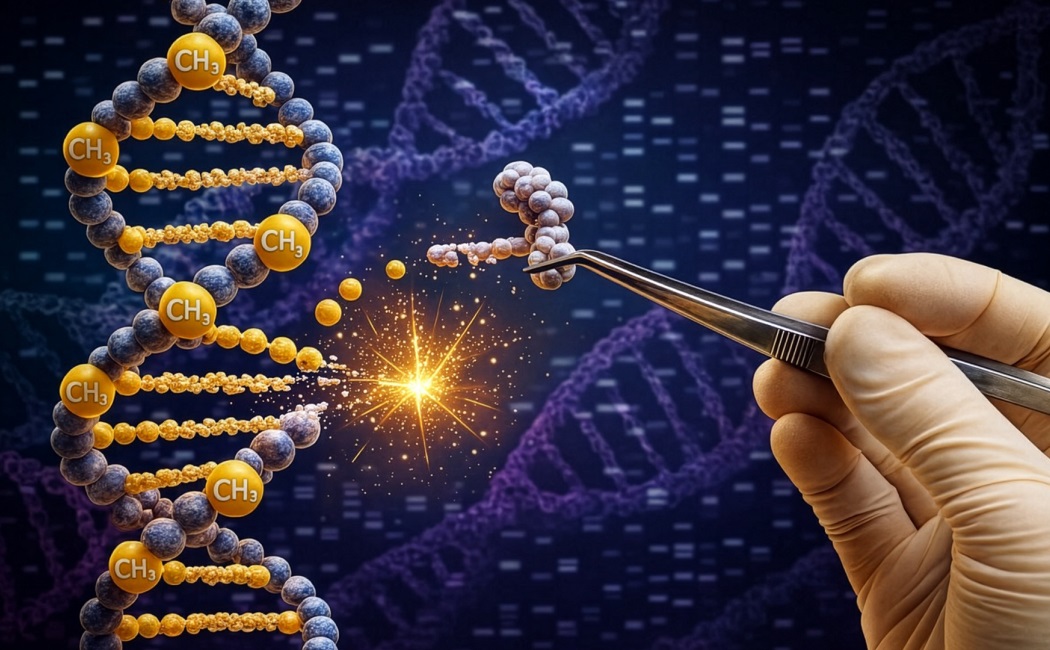
Harnessing the unintended epigenetic side effects of genome editing
03 December, 2025
Editing the genome of human cells to disable, repair, or replace faulty genes holds great potential for treating debilitating conditions like sickle cell disease and cancer.
Several therapies that use the CRISPR-Cas9 tool — molecular scissors that precisely cut DNA to edit problematic genes —have now reached the clinic, including a treatment for sickle cell disease and β-thalassemia that has recently been approved by UK and US regulators. Many other potential treatments are undergoing clinical trials worldwide.
However, the impact of this method on epigenetics remains insufficiently explored. To address this gap, a KAUST study employed a novel technique to describe some of the complex epigenetic implications of CRISPR-Cas9 editing.