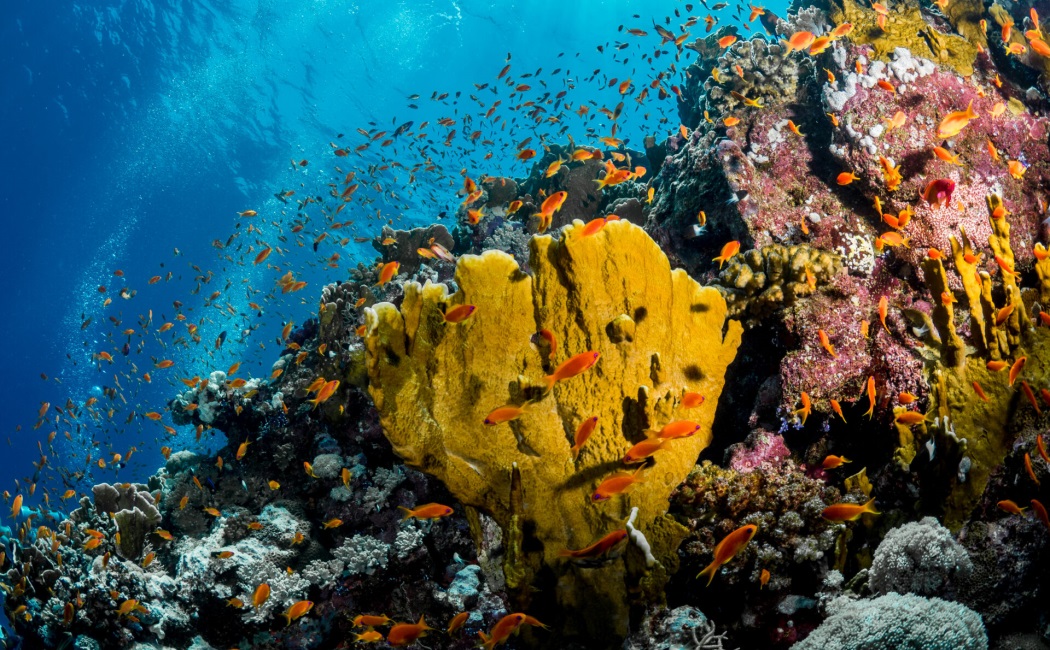
Buying time for coral reefs
19 April, 2026
Mass bleaching events are taking their toll on coral reefs. Researchers are accelerating efforts to develop adaptation strategies that could help coral systems withstand a future where marine heat waves occur more frequently and with greater intensity.
When coral reef ecosystems degrade, fish populations decline, coastlines become vulnerable to storms, and reef pathogens surge. “Think of a coral reef as a house, a restaurant, and a nursery,” says Raquel Peixoto, chair of the Marine Science Program at KAUST. “A diverse range of species need the reef to feed and reproduce, and coastal communities rely on them too.”
As marine heatwaves intensify, the Red Sea, already warmer than most global seas, offers a unique opportunity to study how coral reef ecosystems function under stress. “As a kind of time machine, it shows us how other reefs may look when their waters warm,” Peixoto says. “Researchers from elsewhere can tailor this knowledge for other reef systems.”