A colorful boost for precision genome editing
21 June, 2026
A simple chemical modification developed by KAUST scientists could make CRISPR-based precision genome editing more efficient, less stressful to cells and easier to apply in complex human stem cell models.
The strategy focuses on homology-directed repair, or HDR, the DNA repair pathway used to introduce precise genetic changes after CRISPR-Cas9 cuts the genome. Although HDR is essential for correcting disease-causing mutations, it is often inefficient and can be toxic, particularly in sensitive systems such as human pluripotent stem cells, organoids and embryo-like models.
A team led by Mo Li and Niveen Khashab at KAUST found that attaching a cyanine dye called Cy5 to the 5′ end of single-stranded DNA repair templates, known as ssODNs, markedly improved HDR efficiency. The findings are reported in Nature Communications. These 5′Cy5-modified ssODNs enhanced precise editing across multiple human stem cell models and improved cell survival after CRISPR editing.
“This was surprising because Cy5 is usually thought of as a fluorescent label,” says Li. “Here, we show that it can also act as a functional chemical modification that changes how the repair template behaves inside cells.”
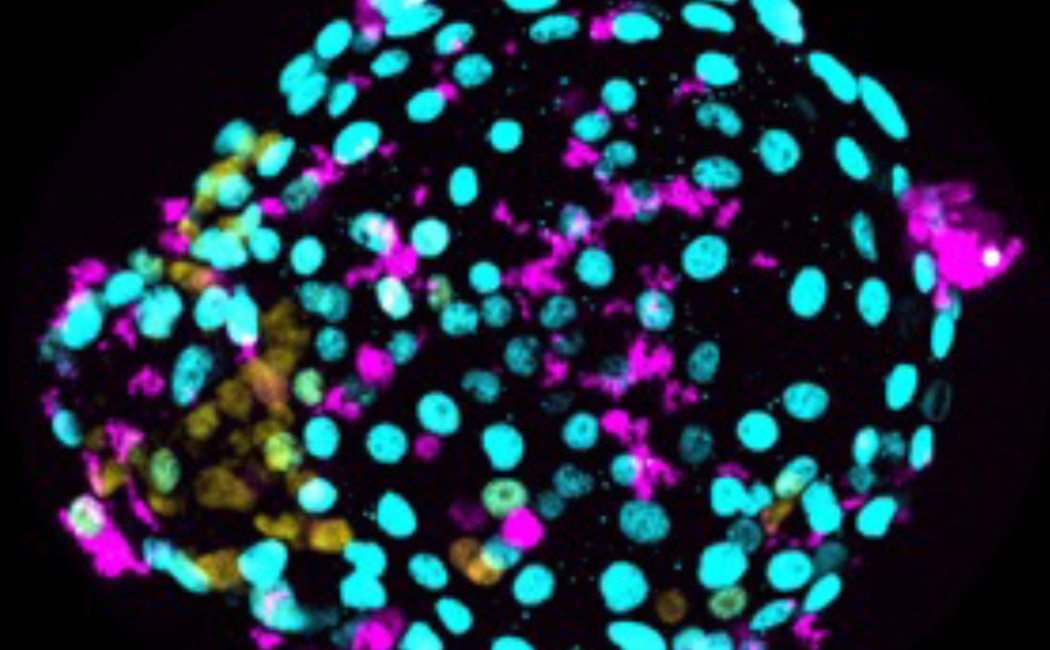
The method enabled correction of disease-relevant mutations, including mutations in the HBB gene associated with sickle cell disease. Importantly, it also worked in complex 3D systems. In human heart organoids, 5′Cy5-ssODNs increased the proportion of precisely edited cardiomyocytes without impairing beating activity. In human blastoids, embryo-like models generated from naïve pluripotent stem cells, the approach achieved nearly 30 percent HBB correction — about a 2.5-fold improvement over unmodified ssODNs — while preserving blastoid morphology, lineage organization and implantation-like behavior.
The researchers also uncovered several mechanisms behind the effect. The 5′Cy5 modification increased the stability and nuclear availability of ssODNs, promoted a compact circular-like donor DNA conformation, and strengthened interaction with target DNA. The modified templates also showed stronger binding to linker histone H1.0, a chromatin-associated protein that the team found can promote HDR.
By linking donor DNA chemistry to chromatin engagement and DNA repair, the study provides a simple and biocompatible route to improve precision genome editing.
“Efficient and safe precise editing remains a major challenge,” says Li. “This work shows that even a small chemical change to the donor DNA can have a large effect on genome repair.”
Read the paper: https://doi.org/10.1038/s41467-026-73901-8