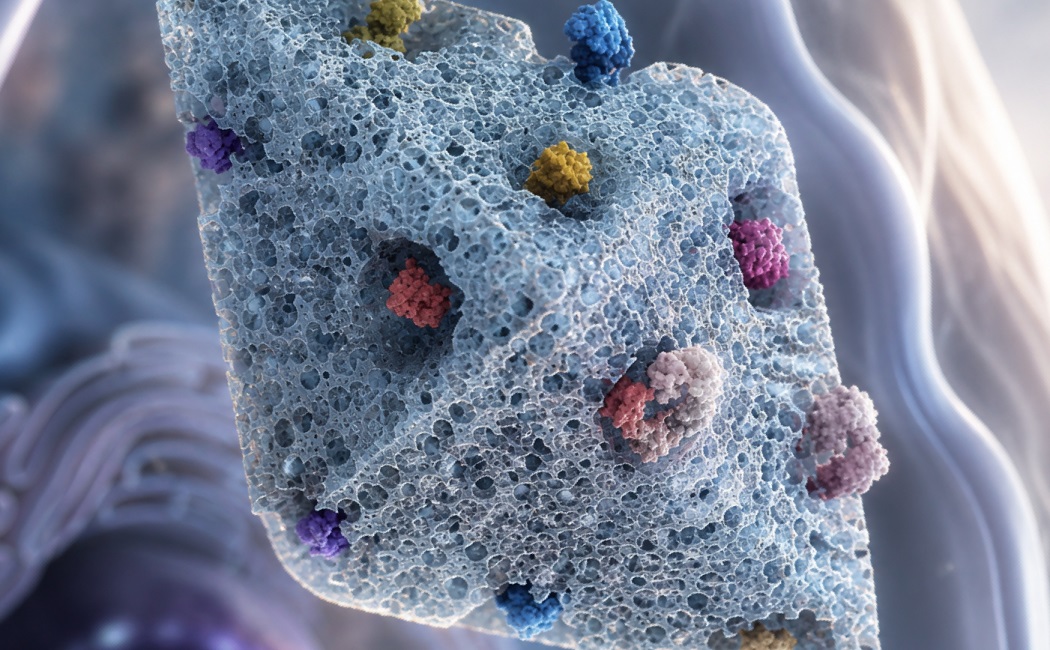
Whole protein pathway delivered into living cells
25 June, 2026
Antibodies, enzymes, and other protein-based drugs are among the most powerful tools in medicine, and clinicians often combine them for greater effect. However, each one travels through the body independently and cannot penetrate cells, meaning they can only influence cellular activity from the outside.
Using specially engineered nanoparticles, KAUST researchers have packaged an entire six-protein biochemical pathway into a single delivery unit and shuttled it into living mammalian cells, where the proteins arrived together and functioned as a self-contained molecular assembly line.
The findings establish what the team calls ‘pathway transplantation’: a technique that could eventually allow drug companies to introduce working multi-protein systems directly into target cells, bypassing the hit-or-miss coordination on which combination protein therapies currently depend and potentially allowing diseased cells to produce therapeutic molecules locally.