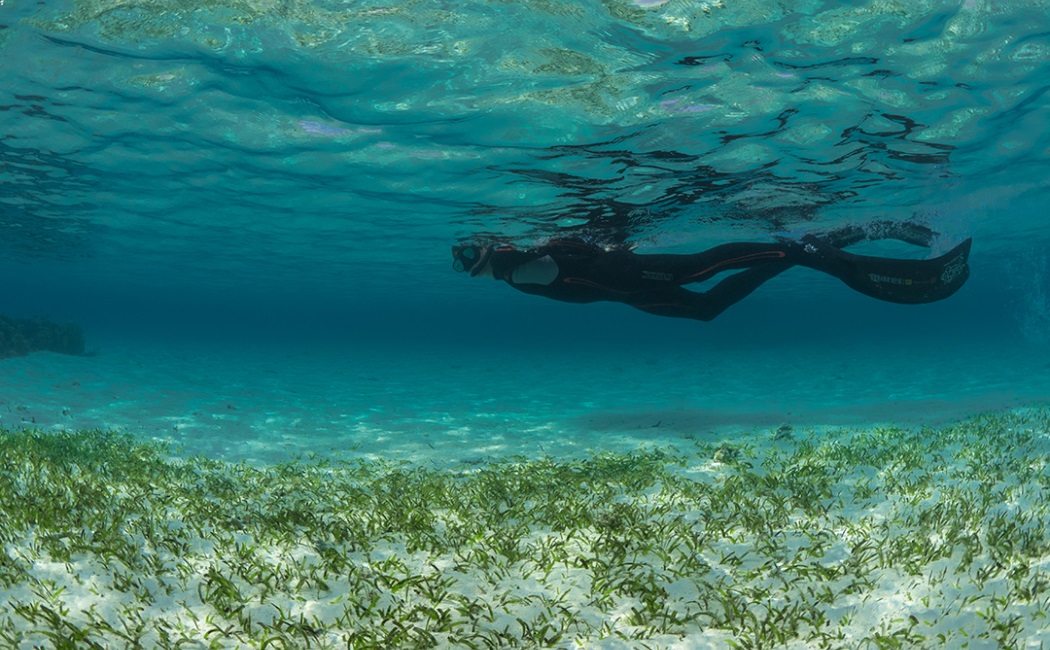
Climate finance could unlock investment in seagrass restoration
24 August, 2026
Scientists have long known that seagrass meadows are among the world's most effective natural systems for storing carbon, protecting coastlines, and supporting marine life. Yet despite their environmental importance, they receive only a small share of global climate finance.
A new international study co-led by researchers at King Abdullah University of Science and Technology (KAUST) explores why and presents a new framework that could help change it.
Published in npj Ocean Sustainability, the research combines ecological and economic modeling to examine how carbon markets could support large-scale seagrass restoration. The study estimates that, under high-value carbon market scenarios, restored seagrass ecosystems could generate carbon credits with an estimated market value of up to US$2.3 trillionwhile creating new opportunities to finance conservation around the world. The researchers stress that these figures represent modeled scenarios rather than predictions and would depend on robust monitoring, transparent carbon accounting, and strong governance.